


How to Handle an Ant Infestation in Your Car

Updated: Jul 28
An ant infestation in car usually happens for one simple reason: ants have found something inside your vehicle that attracts them.
It could be crumbs, sugary spills, moisture, or even just a scent trail from a previous visit. Once one ant finds it, others follow fast. That is why a small problem can suddenly feel like a full infestation overnight.
In most cases, ants are not living in your car long-term. They are visiting. If you remove what attracts them and break their trail, you can stop the problem at its source.
In this guide, I will walk through what causes ants in your car, how to remove them step by step, and how to keep them from coming back.
Understanding Ant Infestations in Cars
What Causes an Ant Infestation in a Car?
Understanding the cause is the first step to solving the problem.
Food Crumbs and Sugary Spills
Ants are always searching for food. Even small crumbs under the seats or sticky residue in cup holders can attract them. A dropped snack, spilled soda, or fast food bag left overnight is often enough to bring ants in.
Moisture Inside the Car
Water can attract ants just as much as food. This includes:
Spilled drinks
Wet floor mats
Condensation from bottles
Small leaks
Parking Near Ant Activity
Sometimes the issue is not inside your car at all. If you park near:
Grass or mulch beds
Trees or shrubs
Cracks in pavement
Ant hills
Ants may simply be exploring and entering your vehicle.
Scent Trails That Keep Bringing Ants Back
This is one of the most overlooked causes. Ants leave behind chemical trails to guide other ants to food. According to the University of Minnesota Extension, ants use pheromone trails to lead other ants directly to a food source, allowing the colony to repeatedly follow the same path even after the initial food is gone. That is why ants can keep coming back even after the food is gone.
Why Are There Ants in My Car Even Without Food?
This is a common question, and it can be confusing.
Ants May Be Exploring
Ants are constantly searching for new food sources. Your car might just be in their path.
Your Car Offers Temporary Shelter
During heat, rain, or changing weather, ants may enter vehicles looking for protection.
Food May Be Hidden in Places You Missed
Even if your car looks clean, ants can find:
Tiny crumbs under seats
Residue in seams and crevices
Sticky areas in cup holders
From what I often see at Hogwash Car Wash, many drivers are surprised to learn that ants show up even when the car looks clean on the surface. In most cases, the issue comes from hidden residue deep in carpets, under seats, or from scent trails left behind from previous spills. According to pest control experts, ants can enter vehicles even when no visible food is present because they are either exploring or following a previously established trail.
Identifying an Ant Infestation
What Are the Signs of an Ant Infestation in a Car?
Not every ant sighting means a serious problem. Here is how to tell the difference.
Signs to Watch For:
Ants appearing daily in the same spot
Trails near doors, tires, or floor mats
Ants gathering in cup holders or storage areas
Activity in the trunk or under seats
If you notice consistent patterns, it is likely more than a random visit.
Where Should You Check First?
Most people miss the real problem areas. Start with these spots:
Under seats and seat rails
Cup holders and center console
Floor mats and carpet edges
Door pockets and glove box
Trunk corners and spare tire area
Child seat areas and snack zones
These areas trap crumbs and moisture, which ants love.
How to Remove Ants From Your Car Step by Step
This is where most people go wrong. They focus on killing ants instead of removing the cause. If you want to be effective with getting rid of ants in the car, you need to address both the source and the trail.
Step 1: Move Your Car
If possible, park in a different location away from grass, soil, or known ant activity.
Step 2: Remove Everything Inside
Take out trash, bags, containers, and anything that may hold food or residue.
Step 3: Vacuum Thoroughly
Focus on hidden areas:
Under seats
Along edges
Inside tight spaces
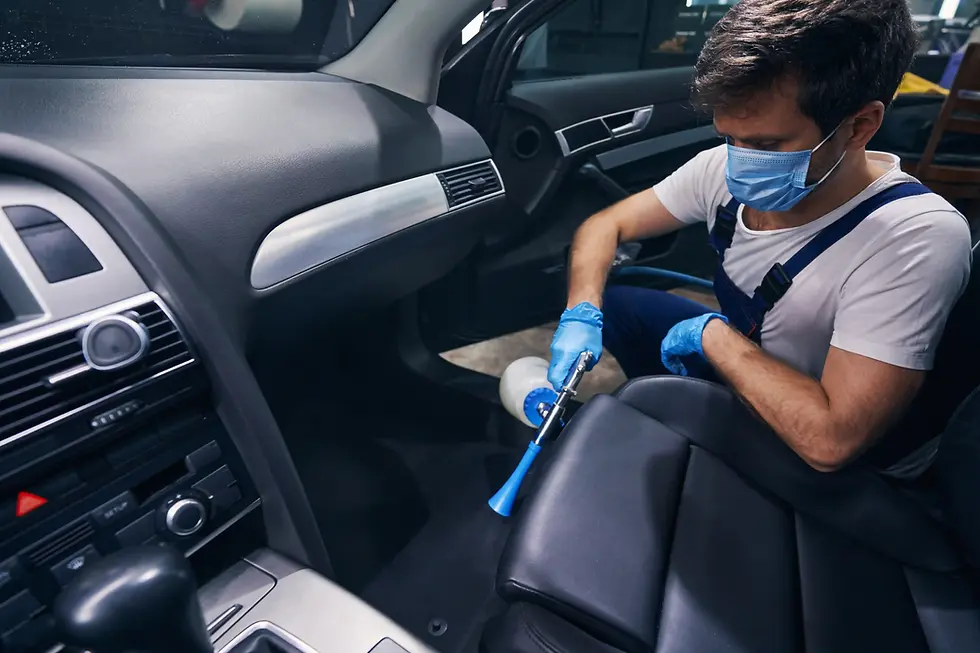
These are the areas where crumbs and residue build up over time. If it is difficult to fully clean these spots or the issue keeps coming back, it may help to schedule a car wash with a more thorough interior clean to make sure nothing is left behind.
Step 4: Clean Surfaces and Break Scent Trails
Use a mild cleaner or soapy water to wipe down:
Cup holders
Dashboard
Door panels
Research shows that soapy water helps remove ant scent trails, making it harder for ants to return. According to the University of California Statewide Integrated Pest Management Program (UC IPM), washing surfaces with soap and water can disrupt and remove the pheromone trails ants use to guide others to food sources.
Step 5: Wash the Exterior
Pay attention to:
Tires
Wheel wells
Door edges
Ants often enter from these areas.
Step 6: Use Bait If Needed
If ants keep coming back, bait can help eliminate the source. Baits work because ants carry the material back to the colony, which helps remove the problem at its root. According to the University of Kentucky Cooperative Extension Service, ant baits are more effective than sprays because foraging ants bring the bait back to the nest, allowing it to reach and impact the entire colony rather than just the ants you see.
Step 7: Check Your Parking Area
Look for nearby nests, cracks, or ant trails where you park regularly.
What Should You Avoid Doing?
Some common mistakes can make the problem worse.
Only Killing Visible Ants
This does not solve the root problem. More ants will follow.
Using Sprays Only
Sprays can kill ants on contact but often do not affect the colony.
Ignoring the Parking Area
If ants are coming from outside, cleaning the car alone will not fix it.
How Can You Prevent Ants From Coming Back?
Prevention is what keeps this from becoming a recurring issue.
Simple Habits That Help:
Avoid eating inside the car
Clean spills right away
Vacuum regularly
Keep floor mats dry
Check bags and containers before placing them inside
Be mindful of where you park
Even small changes can make a big difference.
When Should You Get Extra Help?
Sometimes the problem keeps coming back. You may need help if:
Ants return after repeated cleaning
You suspect a nearby nest
The infestation feels persistent or widespread
In many cases, a deeper interior clean can help remove the hidden debris and residue that basic cleaning misses. For drivers who want a more thorough reset, using a professional full service car wash can help reach areas that are often overlooked during routine cleaning.
Get Rid of Ants for Good Starts With Better Cleaning Habits
An ant infestation in a car usually comes down to one thing: something inside is attracting them, or a trail is leading them back.
Once you remove the source and clean the right areas, the problem becomes much easier to control. Focus on hidden spots, not just what you see on the surface.
At Hogwash Car Wash, I have seen how proper interior cleaning helps drivers prevent repeat issues. A more thorough clean makes it harder for ants to find anything worth coming back to.
If you want to take it further, check out our next guide on how to deep clean your car interior the right way.
FAQs About Ant Infestation in Car
Why do ants appear overnight in my car?
Ants can quickly follow scent trails, so once one finds food, others arrive fast.
Will ants leave on their own?
Sometimes, but if the attractant remains, they will likely return.
Is it safe to use ant spray inside a car?
It can be used carefully, but it is not always the best long-term solution.
How long does it take to get rid of ants?
It depends on the cause. Simple cases can be resolved in a day, while recurring issues may take longer.


Comments